
The Renaissance STAR test is a popular tool for measuring progress in reading, math, and early literacy. It provides valuable insights into your child’s strengths and areas for improvement.
This guide explains how the test works, offers practical preparation tips, and shows you how to interpret scores to support your child’s growth.
You’ll find advice on helping your child stay focused during the test and access to practice resources that can boost confidence and performance.
Let’s dive in and explore how you can help your child succeed.

Created by Roman K., Test Prep Expert Since 2016, who has helped thousands of students achieve higher scores. As a parent myself, I understand your concerns. Feel free to email me at roman@giftedready.com. I'm here to help your child succeed!
The Renaissance STAR test is a computer-adaptive assessment that tracks student progress in reading, math, and early literacy from kindergarten through 12th grade. These assessments adjust question difficulty based on the student’s responses, ensuring an accurate measurement of their skills.
Schools use the test to gather data that helps educators identify learning needs and monitor growth over time. Each test is untimed and typically takes 20 to 30 minutes to complete, making it a quick yet effective tool for guiding instruction.
The STAR test includes three main assessments. Each assessment provides specific insights to help parents and teachers support a child’s academic journey.
The STAR Reading Test evaluates comprehension and literacy skills. It covers vocabulary, sentence understanding, and the ability to interpret short passages.
Read the paragraph about national parks.
National parks are areas of land that are protected by the government. These parks are home to mountains, rivers, forests, and wild animals. Visiting a national park is one of the best ways to enjoy the outdoors. People go there to hike, camp, watch wildlife, or take pictures of nature. Some parks, like Yellowstone and the Grand Canyon, are famous all around the world.
Which sentence in the paragraph states the writer’s opinion?
In this question, you are being asked to find the sentence that shows the writer’s opinion.
An opinion is what someone thinks or feels about something. It’s not a fact that everyone would agree with or that you can prove by checking a book. Writers sometimes include opinions in informational texts to share their own thoughts about a topic.
To spot an opinion, look for words like “best,” “great,” “fun,” “amazing,” or “boring.” These words show how someone feels.
In this question, the second choice (Visiting a national park is one of the best ways to enjoy the outdoors) is the opinion.
The words “one of the best ways” show what the writer thinks. Other people might think the beach or a picnic is the best way to enjoy the outdoors. Because not everyone would agree, and it can’t be proven true, this is the opinion.
The STAR Math test measures mathematical understanding, including basic operations, algebraic concepts, and problem-solving.
STAR Math Sample Question – Geometry and Measurement Domain
How many equilateral triangles are there below?
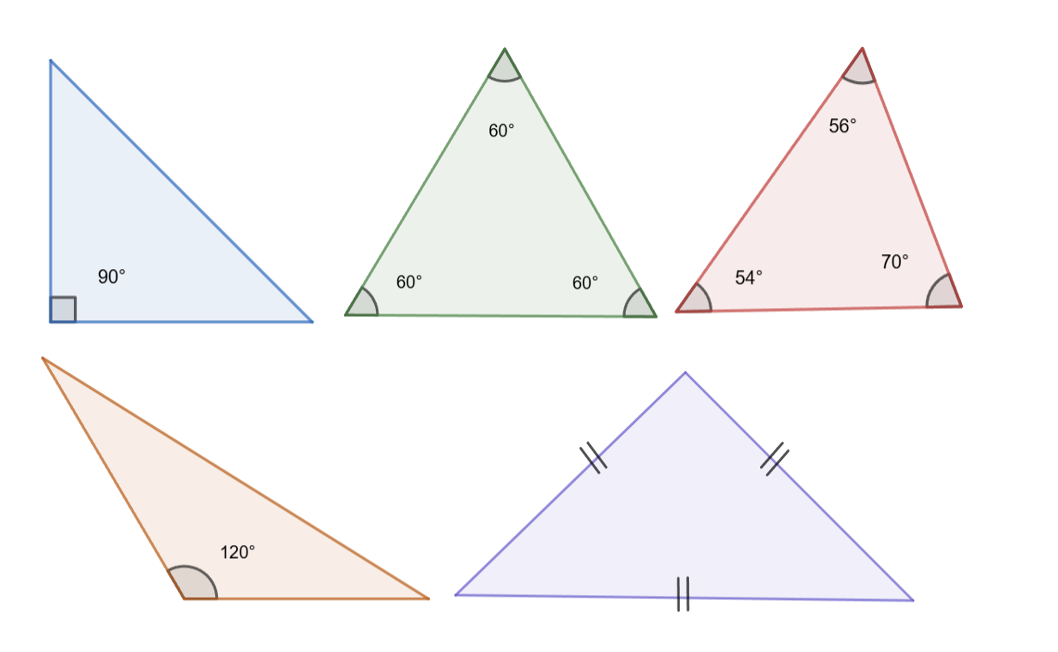
An equilateral triangle is a triangle where all three sides have the same length, and all three angles are equal (each measuring 60 degrees).
Thus, the second figure is an equilateral triangle.
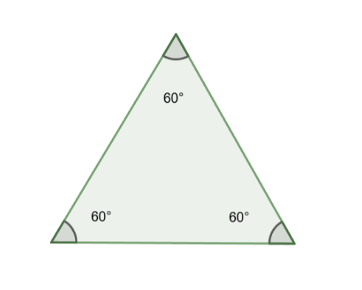
Sometimes in diagrams, equilateral triangles have hash marks on the sides to show that the sides are equal in length. Each side will have the same number of hash marks (or ticks) to indicate equality.
Therefore, the last figure is also an equilateral triangle.
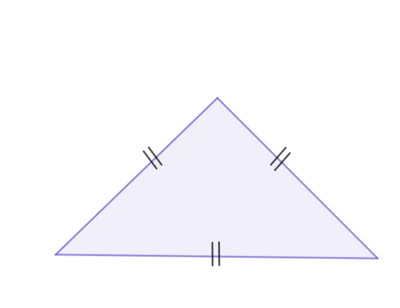
Focuses on foundational skills for younger students, such as phonics, letter recognition, and early word comprehension.
Listen to the given word.

Which letter does it end with?
Correct answer: d
The word is sand.
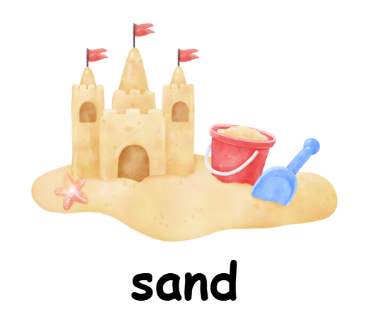
Say the word slowly:
sand = /s/ – /a/ – /n/ – /d/
Listen to the last sound:
The last sound is /d/.
The letter d makes the sound /d/.
Try more exam-like sample questions on our STAR practice tests below:
The STAR test your child takes depends on their grade and reading ability. Younger students usually begin with STAR Early Literacy, then move on to STAR Reading and STAR Math as they progress. Here’s how schools typically assign the tests:
Grade Level | STAR Early Literacy | STAR Reading | STAR Math |
Pre-K | All students | No students | No students |
Kindergarten | All students; some may move to Reading by end of year | A few students at the end of the year | No students |
Grade 1 | All students at the start; many switch to Reading later | Most students by the end of the year | Some students as needed |
Grade 2 | Some students as needed | All students | All students |
Grade 3 | A few students as needed | All students | All students |
Grade 4 – 12 | No students | All students | All students |
The STAR test uses a computer-adaptive format that adjusts question difficulty based on the student’s responses.
When a student answers a question correctly, the next question becomes more challenging. If they answer incorrectly, the test provides an easier question.
This adaptive approach ensures the test is suitable for students with varying skill levels. It delivers precise data, helping educators create personalized learning plans that address each student’s needs.
The STAR tests are computer-adaptive assessments designed to quickly and accurately evaluate students’ academic skills. Administered on a computer, the tests adjust in real-time to each student’s responses, tailoring the difficulty level for precise results.
The test is untimed. However, if a child stays on a question for too long, the test platform will prompt them to keep going.
While the tests are untimed, these durations reflect the average time most students need to complete them.
All STAR assessments are multiple-choice and adaptive. Question difficulty changes based on the student’s answers, ensuring the test remains appropriate for their skill level.
The STAR exam interface is simple and intuitive, making it accessible to students of all ages. Key features include:
This user-friendly design minimizes distractions, enabling students to focus on showcasing their skills.
The STAR Assessment uses multiple scoring methods to give a detailed overview of a student’s academic performance. These scores help track growth, compare progress with peers, and pinpoint areas needing improvement.
A scaled score is the core score in the STAR assessment. It reflects a student’s performance by considering the difficulty of the questions and the number of correct answers.
Score Ranges for STAR Tests
Test | Score Range |
Reading and Math | 0 to 1,400 |
Early Literacy | 300 to 900 |
Scaled scores provide a consistent way to measure performance across different test versions. This consistency allows educators and parents to monitor progress over time, regardless of which test the student takes.
A higher scaled score indicates stronger skills in that subject, making it a key metric for evaluating academic growth.
The percentile rank (PR) measures how your child’s performance compares to other students nationwide in the same grade. It is expressed as a number between 1 and 99.
For example, if your child has a percentile rank of 70, they performed better than 70% of students in their grade who took the same test.
This score provides a clear context for understanding how your child’s academic abilities align with their peers at the same grade level.
The grade equivalent (GE) score shows the grade level where your child’s performance matches typical expectations. It is written as a decimal, with the first number representing the grade and the second number representing the month of the school year.
For instance:
This score helps parents and educators gauge how a student’s skills align with typical grade-level expectations.
Grade Equivalent Score | Interpretation |
4.2 | 4th grade, 2nd month performance |
5.6 | 5th grade, 6th month performance |
7.1 | 7th grade, 1st month performance |
If your child received a GE score of 4.2, it means they performed similarly to an average student in the second month of 4th grade.
It’s important to understand that grade equivalent scores do not indicate that your child should skip a grade or that they are falling behind. Instead, these scores estimate how their performance compares to the average student at a specific grade level.
STAR Reading often provides results in Lexile® measures, in addition to scaled scores and percentiles. A Lexile score is a number that shows how difficult a text is to read and how well it matches a student’s reading ability.
Why it matters: Teachers and parents can use Lexile scores to choose books that are neither too easy nor too difficult. This helps students grow as readers without feeling overwhelmed.
The Student Growth Percentile (SGP) evaluates your child’s academic growth by comparing their progress to students with similar academic backgrounds. SGP scores range from 1 to 99, with higher scores reflecting greater growth.
For example, an SGP of 60 indicates that your child’s growth is higher than 60% of students with similar academic histories.
SGP is a valuable tool for monitoring progress between testing periods, regardless of starting skill levels. It helps determine if your child is advancing as expected and highlights areas where additional support may be needed.
Benchmark categories in STAR reports help determine if a student is meeting grade-level expectations:
The K-12 STAR Assessment uses a range of scores to provide a detailed picture of your child’s academic performance. Understanding these scores helps you track growth, compare performance with peers, and identify areas for improvement.
The scaled score is the foundational score for the STAR assessment. It measures your child’s overall performance by considering both the difficulty of the questions and the number of correct answers.
Scaled scores range from 0 to 1,400:
Test | Score Range |
Reading and Math | 0 to 1,400 |
Early Literacy | 300 to 900 |
Scaled scores offer a consistent measure across different versions of the test, allowing educators to track progress over time, regardless of the specific test taken.
A higher scaled score means stronger performance in that subject.
The percentile rank (PR) compares your child’s performance to that of other students nationwide in the same grade. It’s expressed as a number between 1 and 99.
For example, a percentile rank of 70 means your child performed better than 70% of students in their grade who took the same test.
This rank provides a snapshot of how your child’s skills compare to others at the same grade level, offering a broader context for understanding their academic abilities.
The grade equivalent (GE) score indicates the grade level at which your child’s performance is typical. It’s expressed as a decimal, where the first number is the grade and the second is the month of the school year.
Here’s a table showing examples of GE scores and their interpretations:
Grade Equivalent Score | Interpretation |
4.2 | 4th grade, 2nd month performance |
5.6 | 5th grade, 6th month performance |
7.1 | 7th grade, 1st month performance |
Let’s say your child got a GE score of 4.2. It means your child performed similarly to a typical student in the second month of 4th grade.
It’s important to note that grade equivalent scores don’t suggest that your child should skip a grade or is behind; they simply provide an estimate of how their performance aligns with the average student at a certain grade level.
The Student Growth Percentile (SGP) measures your child’s academic growth over time by comparing their progress to that of similar students. SGP scores range from 1 to 99, with higher scores indicating more growth.
For example, an SGP of 60 means your child’s growth is better than 60% of students with similar academic histories.
SGP is especially useful for tracking how much progress your child has made from one testing period to the next, regardless of their initial skill level. It helps identify whether your child is on track with their learning and where adjustments may be needed.
Many STAR reports include benchmark categories, which indicate whether a student is meeting grade-level expectations:
When a student takes the STAR test, schools receive detailed reports that help both teachers and parents understand the results. These reports turn test scores into practical information about a child’s learning.
By reviewing these reports, parents and teachers can work together to make sure each child gets the right support to grow academically.
Preparing for the STAR test can boost your child’s confidence and performance. With effective strategies, students can feel more comfortable and ready to succeed.
Help your child focus on key grade-level skills:
Using sample questions is a practical way to prepare. Familiarizing your child with the test’s adaptive nature, where question difficulty changes based on responses, helps reduce anxiety. Both free and paid resources can simulate the test environment and question types.
Consistent, low-pressure practice is most effective. Encourage short, regular sessions of 10–15 minutes a day instead of long, intensive study periods. This approach helps students retain information better and build confidence.
Familiarity with the test format is essential for reducing stress on test day. The STAR test is computer-adaptive and multiple-choice, so helping your child navigate this setup can improve focus and performance.
Spend time showing your child how to manage timed questions and move through a computer-based interface. Feeling confident with the format ensures they can concentrate on showcasing their skills rather than worrying about logistics.
Creating a realistic test environment at home can help your child feel confident and well-prepared for the STAR assessment. Replicating the actual test setup reduces anxiety and familiarizes your child with what to expect on test day.
STAR 360 is an enhanced version of the Renaissance STAR assessment, offering a more comprehensive overview of student progress.
While regular STAR tests focus on specific subjects like reading, math, and early literacy, STAR 360 combines these assessments into a unified package. It provides a broader perspective on student achievement by incorporating additional data points, such as attendance and behavior.
This integrated approach helps educators gain a complete picture of a student’s academic performance and growth over time.
Feature | Renaissance STAR | STAR 360 |
Purpose | Used to monitor progress in reading, math, and early literacy. | Provides an all-in-one solution for tracking student progress across multiple areas. |
Assessments Included | Includes STAR Reading, STAR Math, and STAR Early Literacy. | Includes STAR Reading, STAR Math, STAR Early Literacy, STAR Custom, and additional monitoring tools. |
Scope of Data | Focuses on skills in reading, math, and early literacy. | Combines results from various assessments with additional data points for a broader performance analysis. |
Target Audience | Designed for K-12 educators focused on subject-specific progress monitoring. | Ideal for schools seeking a comprehensive assessment suite with deeper insights into overall performance. |
Level of Integration | Tracks individual subject progress through separate assessments. | Integrates data from multiple assessments, offering a holistic view of academic and behavioral progress. |
Frequency of Use | Commonly administered three times a year (fall, winter, spring). | Flexible scheduling allows for year-round testing with customizable frequency options. |
Adaptive Nature | Computer-adaptive tests that adjust question difficulty based on student responses. | Maintains the adaptive testing approach with added flexibility for creating tailored assessments. |
Reporting Features | Provides detailed reports on test results, including scaled scores and percentiles. | Offers advanced reporting with growth tracking, comparative analytics, and teacher-customized insights. |
The highest scaled score is 1,400 for reading and math and 900 for early literacy. A higher score indicates greater proficiency in the subject being tested.
Schools typically administer the STAR test three times a year, in fall, winter, and spring, to monitor growth throughout the academic year. Some schools may conduct the test more frequently.
The STAR test is computer-adaptive, meaning it adjusts the difficulty of questions based on your child’s responses. This ensures the test is neither too easy nor too difficult, making it suitable for students at all skill levels.